Published 2026-11-17
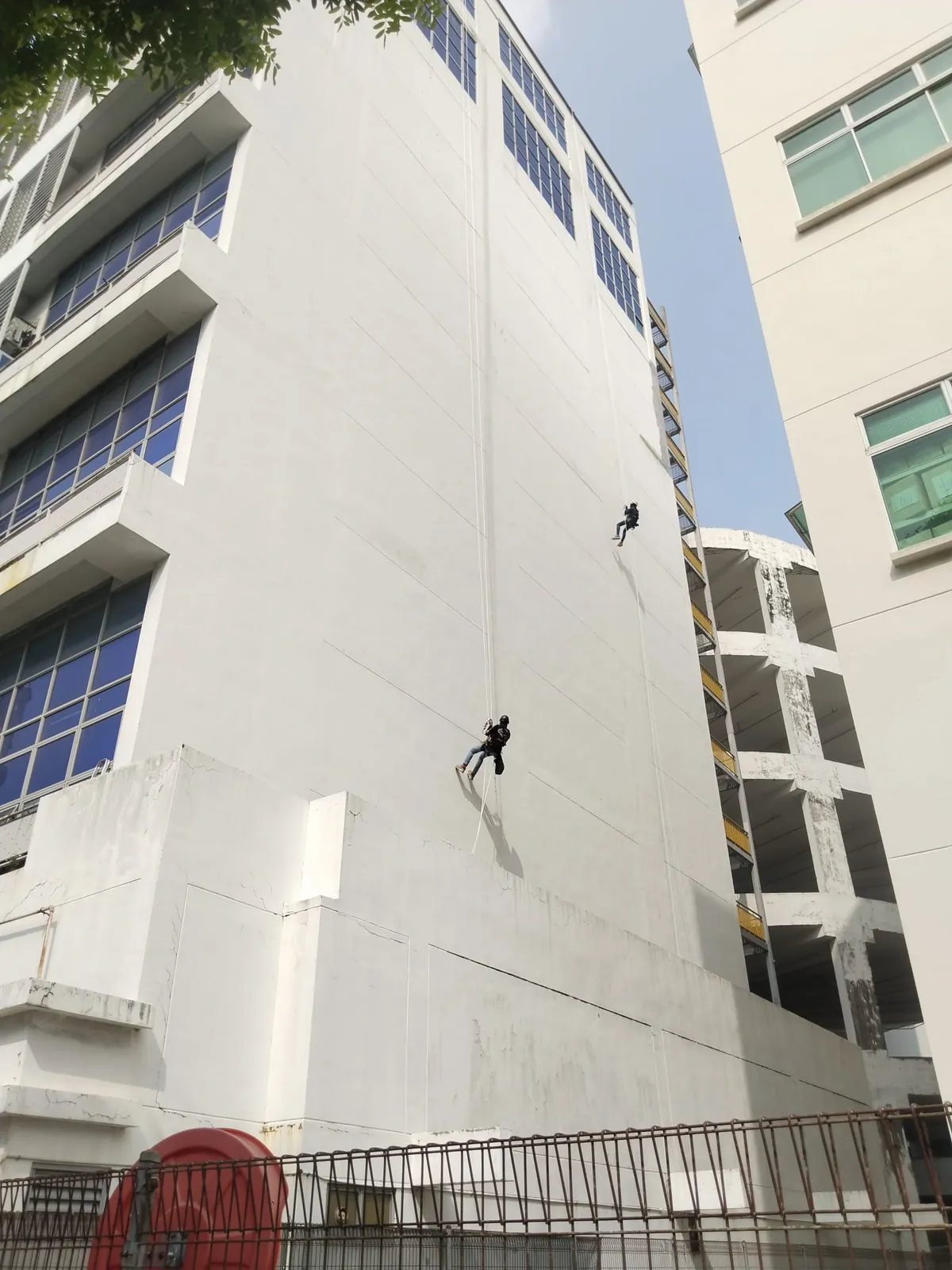
Photo above: Work on a tall end wall under an overcast sky.
Capture the stopping point and unfinished process
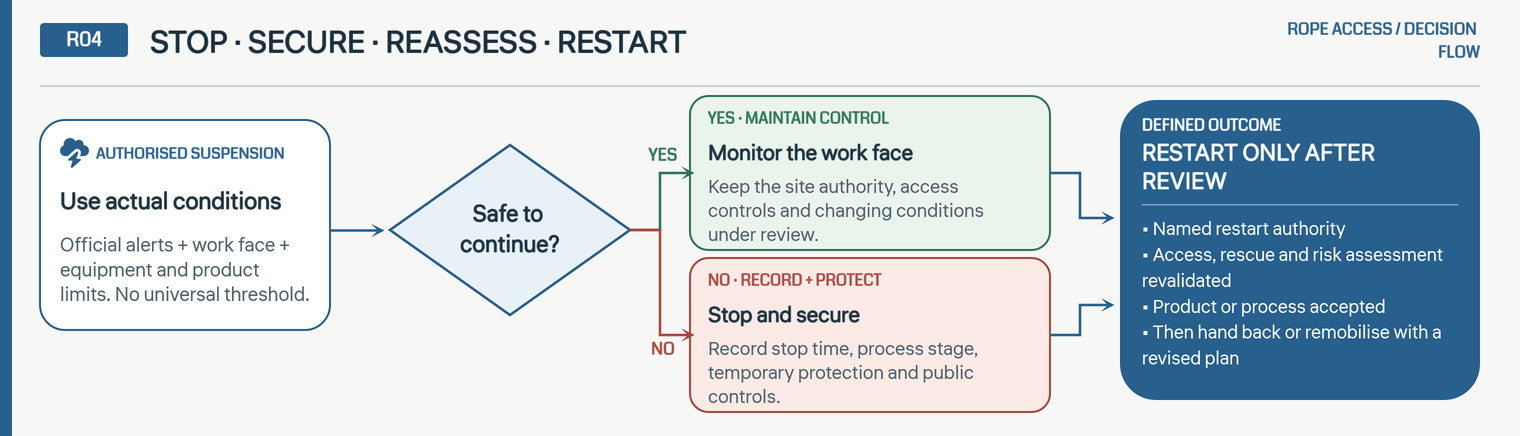
A useful update identifies completed and outstanding elevations or work points, the time work stopped, temporary protection, public controls and any materials or equipment left in place. If surface preparation, sealant, coating or another time-sensitive process was interrupted, record its exact stage and location.
Ask the contractor to check the selected product or process requirements before deciding whether work can continue, needs inspection, must be removed or must be repeated. Do not promise that an interrupted joint or coating can simply be resumed because the rain has stopped.
Use actual conditions and a defined authority to suspend
Meteorological Service Singapore’s Lightning Information Service provides real-time lightning information and configurable alerts. Use official forecasts and alerts together with observations at the elevation, equipment limits, material limits and the site risk assessment. Conditions at street level do not establish safety at the work face. [1]
WSH adverse-weather guidance calls for preparedness, response and safe-resumption planning. IRATA’s code also calls for site-specific emergency arrangements and consideration of environmental exposure. Name who can suspend work, who must be informed and who authorises restart. Do not convert a general guidance wind value into a universal statutory rope-access threshold or invent a standard waiting time. [2] [3]
Issue a revised plan the client can act on
For example: ‘West elevation complete; south return outstanding; current barriers remain; residents will receive a new notice before access resumes.’ Add the next inspection or product review, access and rescue arrangements, expected remobilisation and the contract route for time or cost effects.
Before reopening public or resident areas, verify that temporary protection, loose materials, barriers and access equipment are in the agreed condition. Review the risk assessment after significant procedural changes and keep a clear handback record. [4] [5]
Related: see our external facade waterproofing, and read What to Check on a Paint Sample Before Approving High-Rise Touch-Ups and Work-at-Height Rules in Singapore: What Building Owners Should Know.
Practical checklist
- Record stop time, exact work stage and temporary protection.
- Combine official alerts with work-face conditions and equipment or product limits.
- Name suspension and restart authorities in the site plan.
- Separate safe handback, remobilisation and commercial change decisions.
References
- Meteorological Service Singapore. (n.d.). Lightning Information Service user guide. https://www.weather.gov.sg/lightning/images/Lightning_Information_Service_User_Guide.pdf
- Workplace Safety and Health Council. (2025). Workplace safety and health guidelines: Preparing for adverse weather. https://www.tal.sg/wshc/-/media/tal/wshc/resources/publications/wsh-guidelines/files/workplace-safety-and-health-guidelines-on-preparing-for-adverse-weather.pdf
- IRATA International. (2014). IRATA International code of practice for industrial rope access (TC-102ENG, 2014-Aug-01 v2; live document with amendments). https://irata.org/uploads/documents/International_Code_of_Practice_%28ICOP%29_-_English_TC-102ENG.pdf
- Workplace Safety and Health (Risk Management) Regulations (Singapore), regs. 3–5 and 7. Singapore Statutes Online. https://sso.agc.gov.sg/SL/WSHA2006-RG8
- Workplace Safety and Health (Work at Heights) Regulations 2013 (Singapore), regs. 4 and 29–30. Singapore Statutes Online. https://sso.agc.gov.sg/SL/wsha2006-s223-2013