Published 2026-11-17
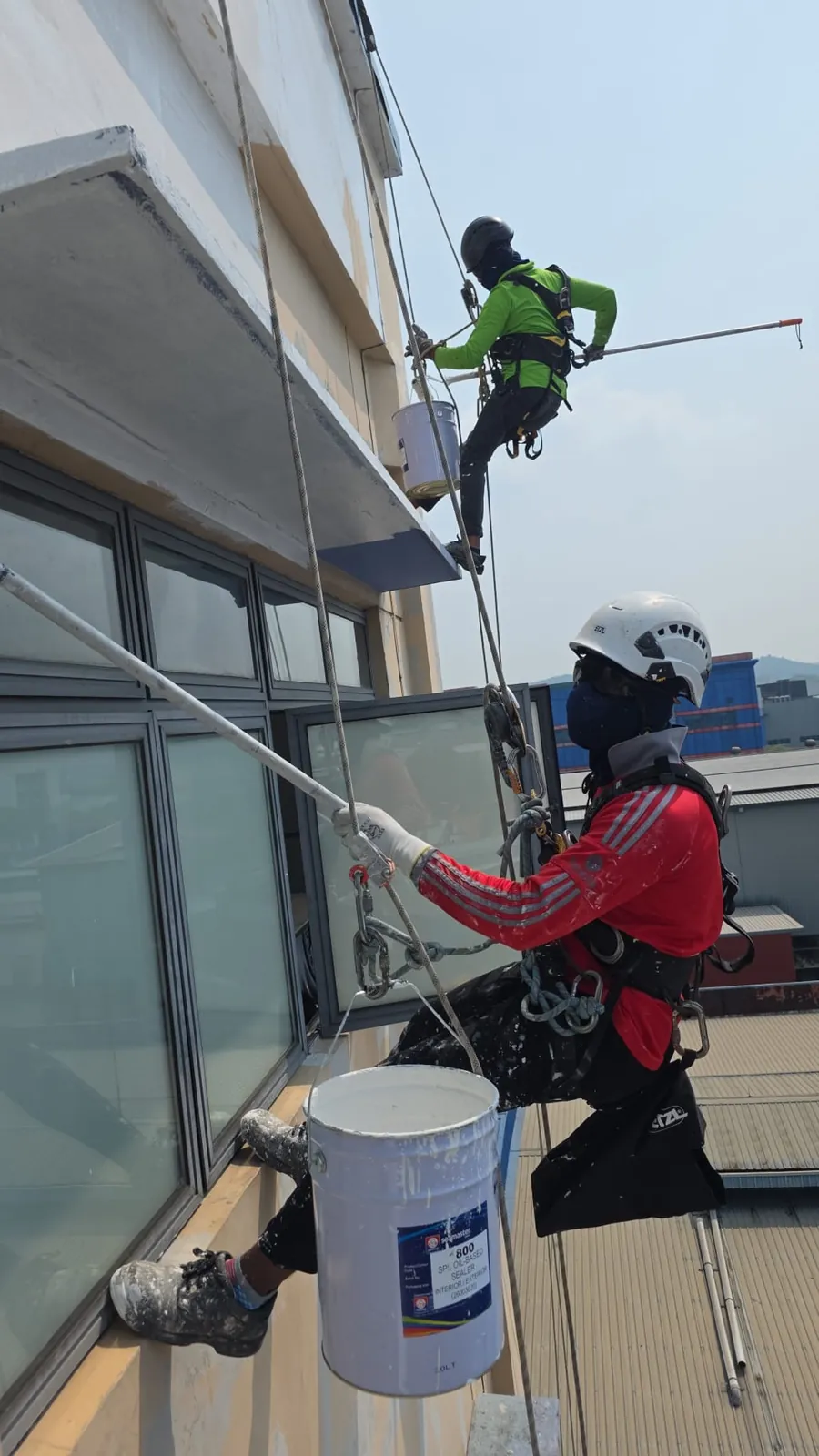
Photo above: Coating work on an external wall by rope access.
Make the sample representative
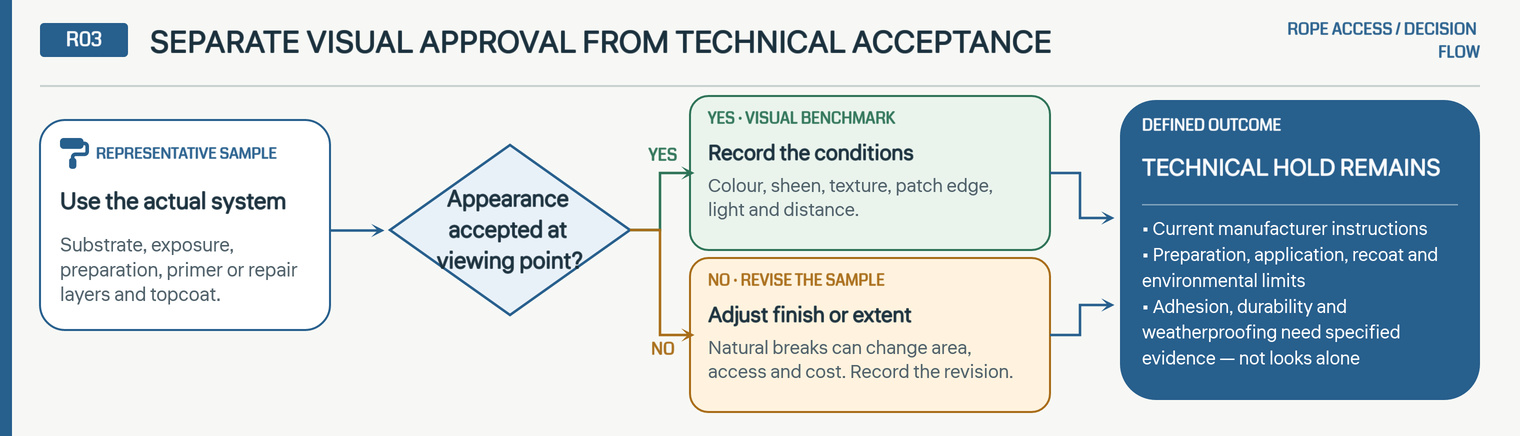
Choose an area with similar substrate, exposure, texture, ageing and existing finish to the proposed repairs. Photograph the surroundings before preparation. Use the actual proposed preparation, primer or repair layers and topcoat, and record the product names, colour, batch details where relevant, applicator and date.
Obtain the selected manufacturer’s current technical data sheet and safety information. Follow the specified substrate preparation, application conditions, wet and dry film requirements where applicable, drying and recoating intervals, and environmental limits. Do not adopt a generic brand example or a universal drying period for an unspecified system.
Agree what visual acceptance means
After the product-specific interval, view the sample from the normal viewing location and distance, such as a courtyard or opposite wing. Check under relevant changing light if appearance varies through the day. Compare colour, sheen, texture, coverage and visible patch edge. Record the agreed viewing conditions alongside the photographs.
If the patch remains prominent, consider extending to a natural break such as a panel edge or architectural joint. Show how that changes area, access and cost. Where different elevations have aged differently, state whether one sample applies only to the represented condition.
Record acceptance limits and technical exceptions
Keep the approved sample location, images, preparation, products, viewing point, accepted blend and any scope change in the work record. Treat the sample as the appearance benchmark for the represented conditions. Any adhesion test, moisture criterion, repair compatibility check or weatherproofing requirement must come from the appointed specification and actual product system, not from visual approval alone.
If rope access is used to create or inspect the sample, the access work remains subject to the site risk assessment and applicable work-at-height and rope-access requirements. Sample convenience does not justify an unassessed route. [1] [2]
Related: see our rope access painting and spray painting, and read What Happens to a Rope-Access Job When the Weather Interrupts It? and Facade Waterproofing in Singapore: stopping water at the source.
Practical checklist
- Match sample substrate, exposure and ageing to the repair area.
- Use the actual selected system and current manufacturer instructions.
- Record viewing location, distance, light and accepted visual limits.
- Keep appearance approval separate from adhesion and durability evidence.
References
- Workplace Safety and Health (Risk Management) Regulations (Singapore), regs. 3–5 and 7. Singapore Statutes Online. https://sso.agc.gov.sg/SL/WSHA2006-RG8
- Workplace Safety and Health (Work at Heights) Regulations 2013 (Singapore), regs. 4 and 29–30. Singapore Statutes Online. https://sso.agc.gov.sg/SL/wsha2006-s223-2013