Published 2026-11-17
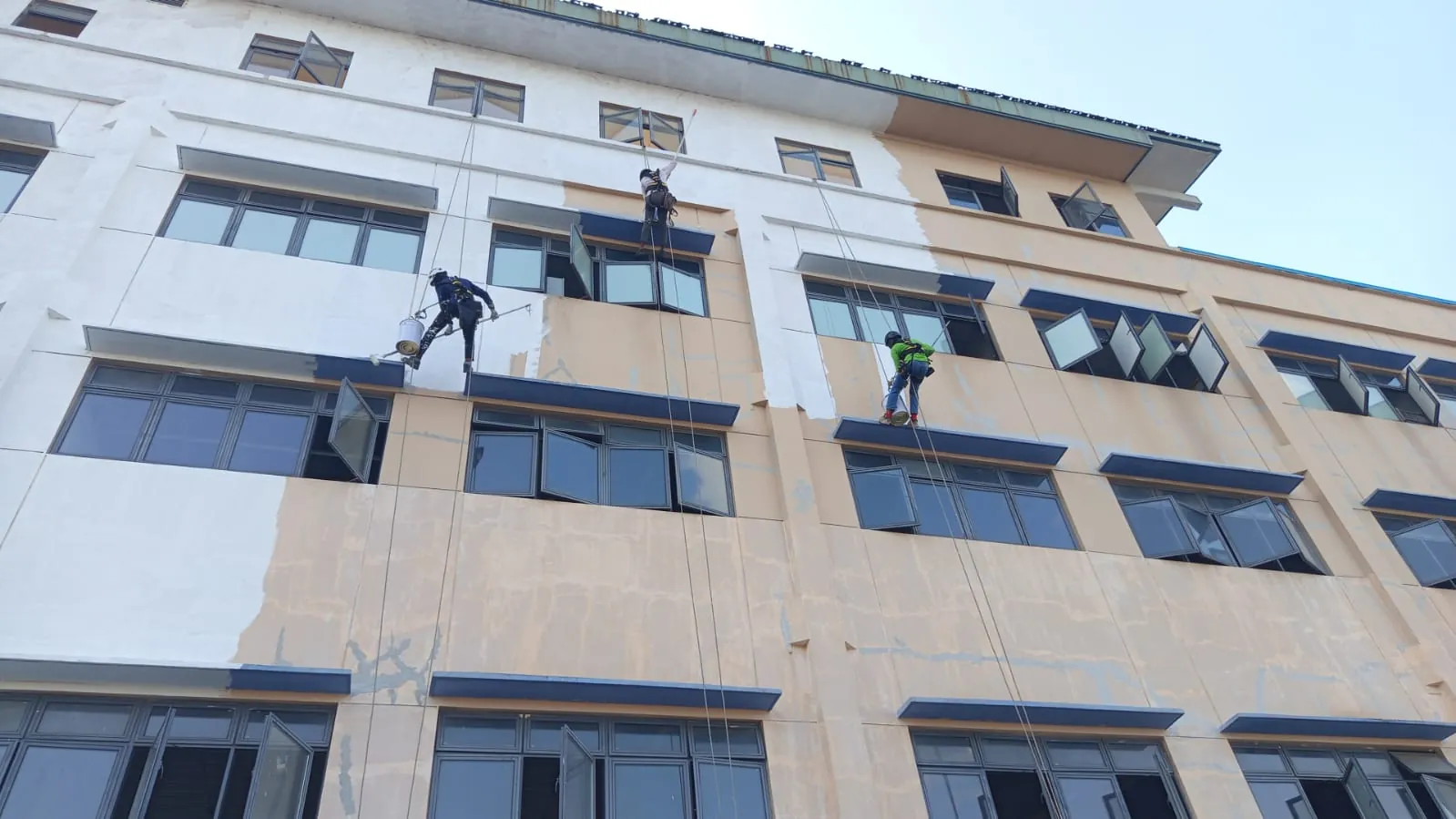
Photo above: Several technicians on separate lines across one elevation.
Define the work route before comparing numbers
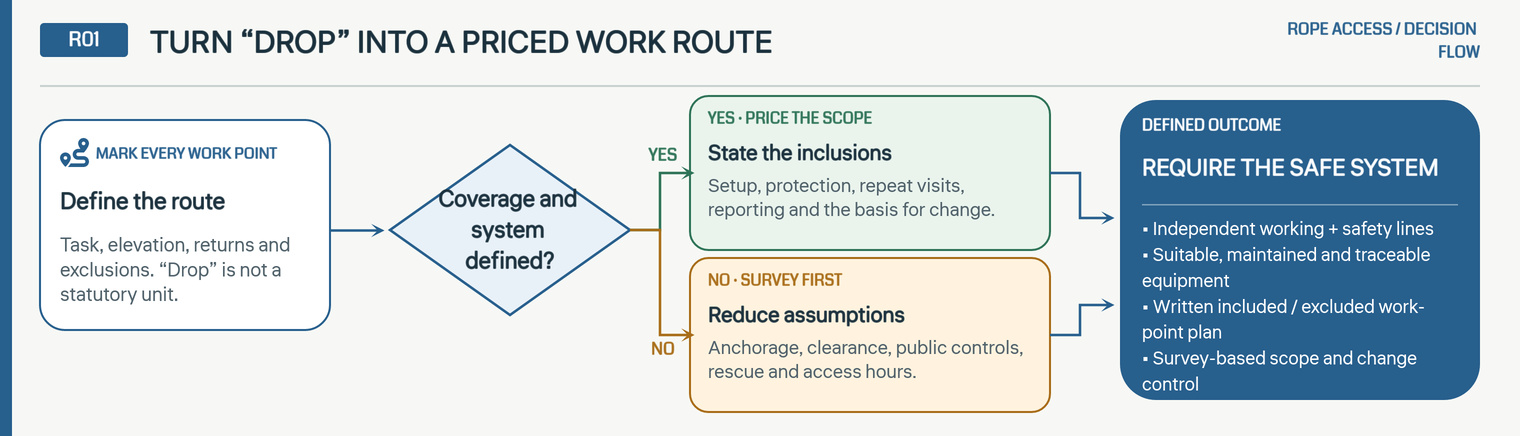
Ask the contractor to mark the windows, joints, panels or other work points covered by each proposed route. A continuous stack may be accessible from one workable setup, while a return, recess or canopy may require repositioning or another arrangement. Include the task itself: visual inspection, sealant removal, coating or material handling can change the access and time required.
The site survey should establish suitable working positions, anchorage, clearance, third-party protection and rescue. IRATA’s code treats planning, management, competence, suitable equipment, inspection, work methods, exclusion zones and emergency arrangements as parts of one safe system. [1]
Read the price against the elevation and task
Imagine three windows in one vertical stack and two around a return. Ask which route covers each window, whether the return is included, and how setup, protection, repeat visits, reporting and additional work points are priced. Record assumptions about work hours, resident or public controls, materials and weather interruption.
Singapore’s Work at Heights Regulations require at least two independent anchorage lines for industrial rope access: a working line and a safety line. They also require equipment of sound construction and adequate strength, free from patent defects, properly maintained and uniquely marked for traceability. A price by ‘drop’ must not obscure those system requirements or imply that a route is only a length of rope. [2]
Reduce assumptions before the survey
Share marked elevations, affected levels, safe-position photographs, access hours and any available roof or anchorage records. Identify which records are historical or unverified. The contractor must still assess the proposed work and current site conditions. After the survey, request a written scope showing covered and excluded areas, the basis for repeat setup and the process for authorising changes. [3]
Related: see our our rope access services, and read Why a Straight Rope Drop Can Miss Part of a Building and Rope Access vs Timber Scaffolding vs Boom Lift Cost for a 4-Storey Building in Singapore.
Practical checklist
- Mark every included and excluded work point.
- Define the task, setup, public protection and rescue assumptions.
- Show repeat visits, reporting and remobilisation in the price basis.
- Do not let a commercial route label replace the statutory rope-access system assessment.
References
- IRATA International. (2014). IRATA International code of practice for industrial rope access (TC-102ENG, 2014-Aug-01 v2; live document with amendments). https://irata.org/uploads/documents/International_Code_of_Practice_%28ICOP%29_-_English_TC-102ENG.pdf
- Workplace Safety and Health (Work at Heights) Regulations 2013 (Singapore), regs. 2, 4 and 29–30. Singapore Statutes Online. https://sso.agc.gov.sg/SL/wsha2006-s223-2013
- Workplace Safety and Health (Risk Management) Regulations (Singapore), regs. 3–5 and 7. Singapore Statutes Online. https://sso.agc.gov.sg/SL/WSHA2006-RG8