Published 2026-11-17
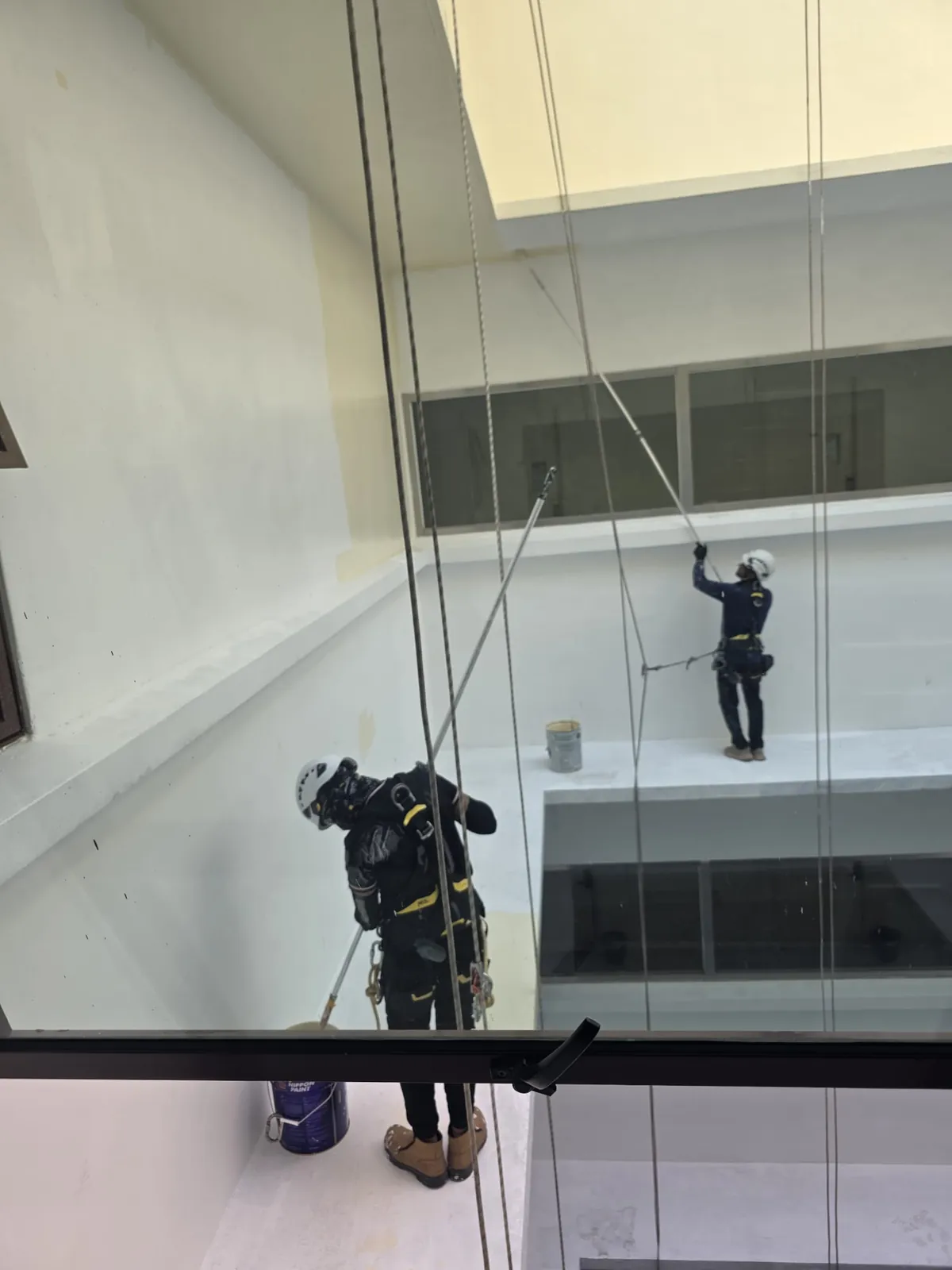
Photo above: Lines rigged from above into an internal courtyard.
Hand over the current operating picture
Include marked elevations, access points, roof-release contact, work-hour limits and the areas below. Flag recent roof works, new plant, landscaping, doors, public routes and locations that previously required a different approach. Date photographs and identify who supplied each record.
Add practical task history: previous work zones, reported limitations, public-control arrangements and unresolved repairs. This helps the new team plan a survey; it does not replace its pre-work analysis, risk assessment or method statement.
Give anchorage records a clear status
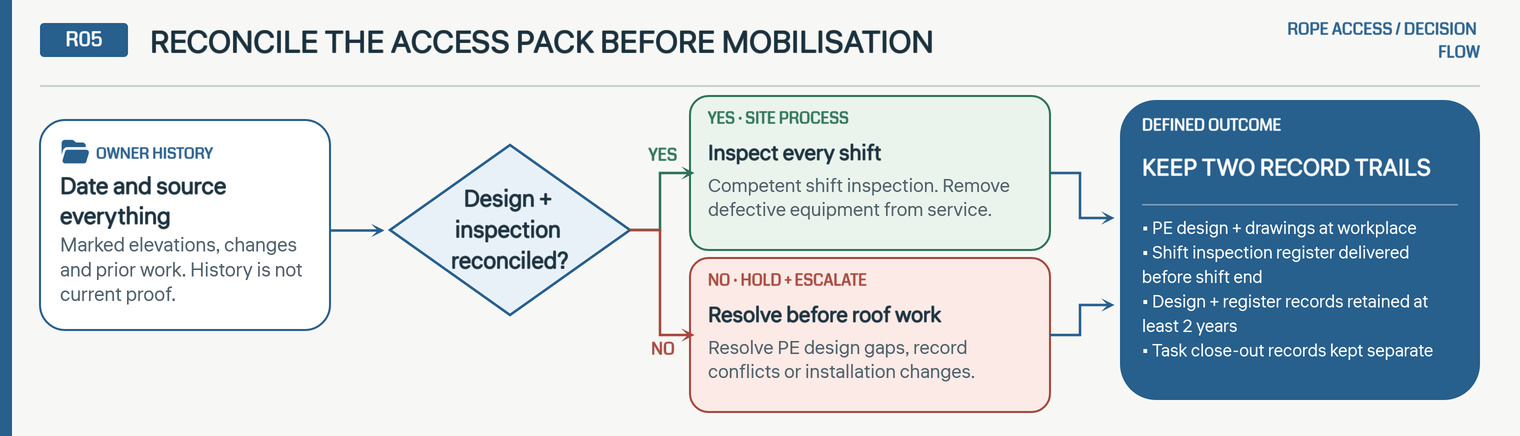
Regulation 30 requires industrial rope-access anchorages and anchorage lines to be installed according to a professional engineer’s design and drawings, except the stated tree-cutting and pruning exclusions. The certified design and drawings must be available at the workplace and support proper installation. A competent person inspects the system at the start of every work shift; defective equipment must be removed from service. [1]
Inspection results must be entered in a register and supplied to the responsible person before shift end. The prescribed register entries and design documentation must be retained for at least two years from the date each was made. The owner’s access pack should help the team locate these records, but a historical drawing alone is not evidence that the current installation is unchanged or suitable.
Return a clean record after the job
Ask for marked completed areas, changes, exceptions and location-specific task evidence. Keep access-system records distinct from repair or inspection completion records, with cross-references where useful. IRATA’s code also supports equipment traceability, inspection records, competent personnel and site-specific rescue planning as parts of the safe system. [2]
Before the next callout, reconcile reported building changes with the available PE design and current inspection evidence. Escalate missing or contradictory information before mobilisation rather than allowing the next crew to discover it at the roof edge.
Related: see our rope access facade inspection, and read Work-at-Height Rules in Singapore: What Building Owners Should Know and What Is a Rope-Access Drop, and Why Does It Affect Your Quote?.
Practical checklist
- Date and source every photograph, drawing and access note.
- Separate historical owner records from certified current design evidence.
- Provide start-of-shift inspection and register information through the responsible site process.
- Retain prescribed register entries and design documentation for at least two years.
References
- Workplace Safety and Health (Work at Heights) Regulations 2013 (Singapore), regs. 29–30. Singapore Statutes Online. https://sso.agc.gov.sg/SL/wsha2006-s223-2013
- IRATA International. (2014). IRATA International code of practice for industrial rope access (TC-102ENG, 2014-Aug-01 v2; live document with amendments). https://irata.org/uploads/documents/International_Code_of_Practice_%28ICOP%29_-_English_TC-102ENG.pdf