Published 2026-05-05
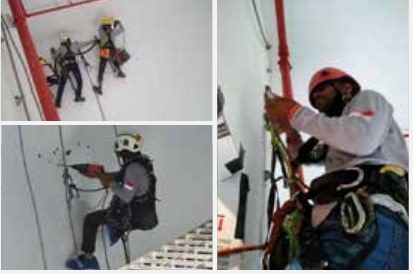
A rope access technician needs more than the ability to climb ropes. The role requires technical rope skills, equipment knowledge, work-at-height awareness, rescue understanding, communication, discipline and the ability to work under supervision in a controlled system.
For Singapore projects, technician assignment should be checked against the work scope, site hazards, client requirements and applicable WSH duties. Certificates and training records should be current and relevant to the work being performed.
Core technical skills
Rope movement and positioning
Technicians must be able to ascend, descend, transfer, position themselves and maintain control while working on a facade, structure or difficult-access area. These skills must be performed in a way that protects both the worker and people below.
Equipment inspection
Rope access work depends on the condition of ropes, harnesses, connectors, descenders, backup devices, helmets and related personal protective equipment. Technicians need to check their equipment before use and report defects.
Anchor and rope-system awareness
Technicians should understand the difference between the working line and safety line, basic anchor concepts, rope protection, edge hazards and how the access system is arranged. More complex anchor design or verification may need a competent person, supervisor or professional review.
Rescue awareness
Rope access teams must think about rescue before work starts. Technicians should understand the rescue plan, communication method and emergency arrangements. Senior personnel may be responsible for more advanced rescue coordination.
Trade skills
Rope access is only the access method. The technician may also need trade competence for the actual work — cleaning, waterproofing, painting, sealant, inspection, glazing support, signage or minor facade repair.
IRATA levels
IRATA is a widely recognised rope access training and certification scheme. Official IRATA descriptions include:
- IRATA Level 1: a technician who can perform a specified range of rope access tasks under Level 3 supervision.
- IRATA Level 2: an experienced technician with Level 1 skills plus more complex rigging, rescue and rope-access skills, under Level 3 supervision.
- IRATA Level 3: a technician capable of responsibility for rope-access safety in work projects, with knowledge of Levels 1 and 2, relevant work techniques and legislation, advanced rigging and rescue, current first aid and the IRATA training, assessment and certification scheme.
IRATA training requirements include being at least 18 years old, having suitable fitness and physical capability, a responsible attitude, respect for heights and no medical condition that prevents safe work. For upgrades, IRATA references a valid certificate, at least one year of experience and 1000 logged working hours. See IRATA rope access training overview.
IATRAS and other training pathways
Some project teams may reference IATRAS or other rope-access training pathways. Where IATRAS qualifications are relevant, the current certificate, level, issuing body, competency scope and expiry should be checked before assignment. Do not treat any certificate name as automatic regulatory approval.
Work-at-height awareness
Rope access technicians also need practical understanding of work-at-height controls, such as:
- Fall prevention planning.
- Permit-to-work requirements where applicable.
- Supervision and communication.
- Open edges, openings and fragile surfaces.
- Personal fall arrest and travel restraint concepts.
- Inspection and maintenance of equipment.
- Emergency response and rescue planning.
See work-at-height safety brief and work-at-height rules for building owners.
Soft skills and behaviour
Good rope access technicians are disciplined, calm, responsible and able to follow procedures. They must communicate clearly with supervisors, ground teams, clients and other trades. A poor attitude or disregard for safety can make a technically skilled worker unsuitable for rope access work.
Conclusion
A suitable rope access technician combines rope skills, trade competence, safety awareness and responsible behaviour. For building owners, the practical question is not just whether a technician has a certificate. It is whether the assigned team, supervision and work method match the project scope and site conditions. Contact us to discuss your scope.